Last updated October 15, 2026
DIY vs Professional ADU: The Dallas Homeowner’s Decision Guide
Texas is one of the few states where a homeowner can legally wire their own primary house, run their own gas lines, and plumb their own bathrooms without a license. Pull up the statute and it reads like a handyman’s permission slip. But build a detached ADU in your Dallas backyard and that exemption evaporates. The structure is treated differently under Texas law, and the gap between what you can do on your house and what you’re allowed to touch on an accessory dwelling unit is where a lot of Dallas homeowners get into trouble. This guide draws that line precisely, phase by phase, so you can decide where your own labor makes sense and where a professional build is the only path that won’t come back to haunt you.
Quick Answer
In Dallas, Texas, you can legally act as your own general contractor on an ADU project, handling permits, site prep, and rough carpentry yourself, but electrical, plumbing, and HVAC work on a detached ADU must be performed by licensed tradespeople under Texas law. For most Dallas homeowners, the practical answer is a hybrid: manage what you’re genuinely qualified to do, and hire licensed professionals for the systems, foundation, and roof phases where mistakes compound. If you want a finished ADU delivered on a known timeline with a written guarantee, hiring a professional ADU builder in Dallas is the lower-risk route. For help finding the right partner, see our guide on How to Hire a ADU Contractor in Dallas: A Step-by-Step Guide.
Table of Contents
- What Texas Law Actually Says About DIY on an ADU
- The Real Cost of Owner-Managed ADU Projects in Dallas
- The Highest DIY Failure Phases in North Texas
- The Insurance and Liability Gap You Need to Know About
- A Decision Framework That Matches Your Skills to the Tasks
- The Prefab Question: Is a Factory-Built ADU Easier to DIY?
- Permits and Inspections: What Dallas Actually Requires
- Common Mistakes to Avoid
- When to Call a Professional
- Frequently Asked Questions
- The Bottom Line
What Texas Law Actually Says About DIY on an ADU
The Texas Occupations Code draws a line that surprises most homeowners. Under Section 1301.052 and related statutes, a homeowner may perform electrical, plumbing, and air conditioning work on property that is their primary residence, provided they own and occupy it. The exemption is written for people working on the house they live in. A detached accessory dwelling unit, even one built in your own backyard, does not fall under that residential exemption. Texas courts and municipal code reviewers in Dallas treat a detached ADU as a separate structure with its own permitting path, its own inspection requirements, and its own licensing obligations.
Here is what that means in practical terms for a Dallas homeowner:
- Electrical work on a detached ADU: Must be performed by a licensed Texas electrician. Running a subpanel from your main house to the ADU, wiring outlets, installing fixtures, and connecting the unit’s service all require a licensed contractor.
- Plumbing on a detached ADU: Must be performed by a licensed Texas plumber. This includes the sewer tap, water supply line, drain lines, and any gas line for a tankless water heater or range.
- HVAC and mini-split installation on a detached ADU: Must be performed by a licensed Texas HVAC contractor. Refrigerant handling requires EPA Section 608 certification, and Texas requires a state HVAC license for the work itself.
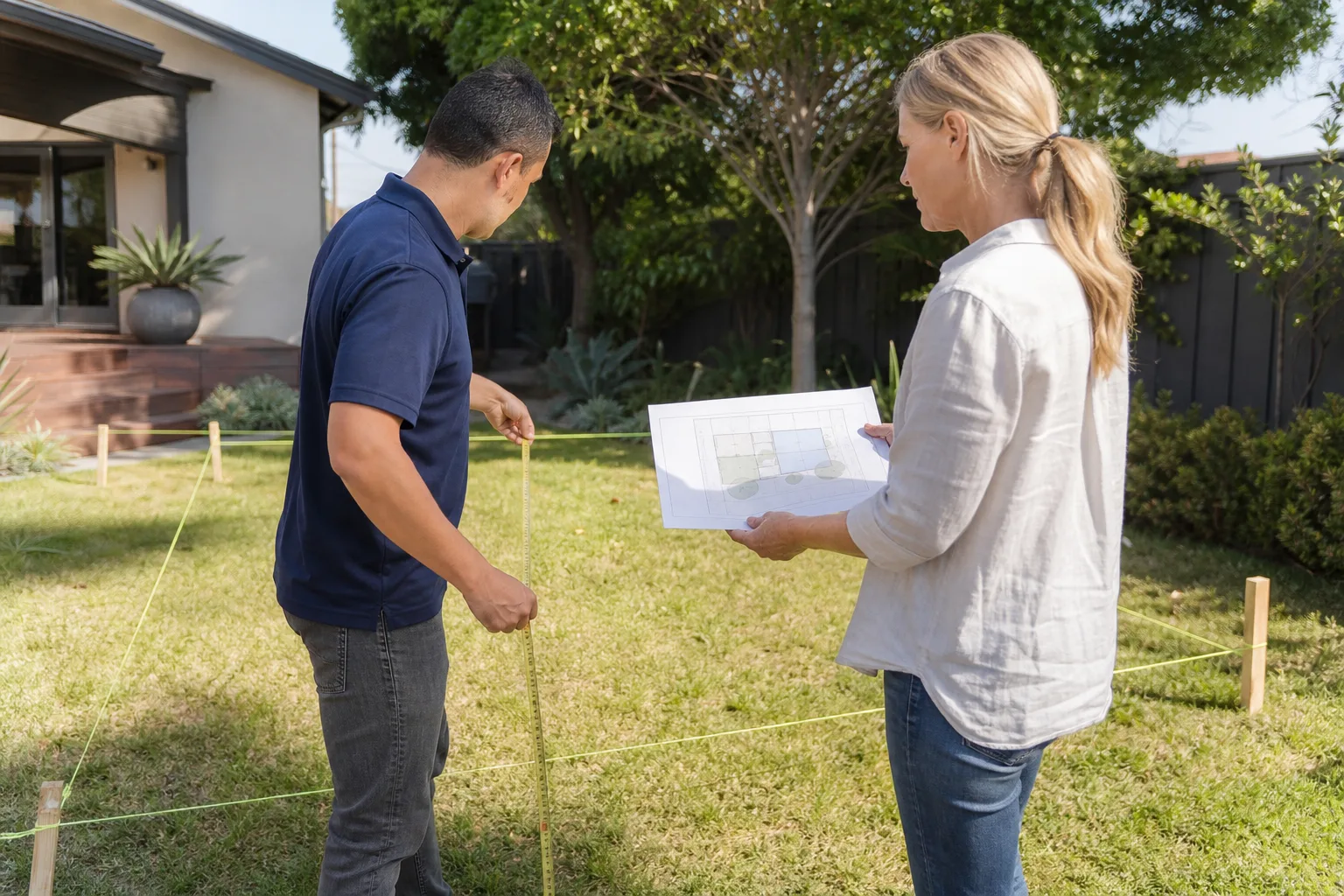
- What you can legally do yourself: You can pull owner-builder permits in Dallas, clear and prep the site, pour concrete or set pier footings (with the right inspections), do rough and finish carpentry, install insulation, hang drywall, paint, install flooring, set cabinets, and handle most finish trim. You can also act as your own general contractor, hiring licensed subcontractors for the systems work while you take on the labor you feel confident about.
This distinction is not a best-practice recommendation. It is a statutory requirement. A homeowner who wires a detached ADU in Dallas has done unlicensed electrical work, full stop. If a fire starts and an insurance adjuster traces it to that wiring, the policy implications are immediate and severe, which we’ll get into below.
The Real Cost of Owner-Managed ADU Projects in Dallas
On paper, acting as your own general contractor on a Dallas ADU saves 15 to 25 percent of the total project cost, because a professional GC carries markup, overhead, and profit. On a $180,000 garage conversion or a $240,000 backyard ADU in Dallas, that looks like $27,000 to $60,000 in savings. In our experience across North Texas, the number that actually ends up on your final ledger is more complicated.
Here is a realistic breakdown of where owner-managed projects in the Dallas market typically land, compared against a professional build with fixed pricing:
| Project Phase | Professional Fixed Price (Dallas) | Owner-Managed Range (Dallas) | Where the Variance Comes From |
|---|---|---|---|
| Plans and structural engineering | $4,000 – $8,000 | $3,500 – $7,500 | Same vendors either way, small savings |
| Permits and city fees | $3,000 – $6,000 | $3,000 – $6,000 | Fees are the same; mistakes add re-filing costs |
| Foundation (slab or piers) | $12,000 – $22,000 | $10,000 – $20,000 | Clay soil corrections add cost if missed early |
| Framing and roofing | $28,000 – $45,000 | $15,000 – $30,000 | Largest DIY savings area, highest rework risk |
| Electrical, plumbing, HVAC | $35,000 – $55,000 | $35,000 – $55,000 | Licensed trades required either way |
| Insulation, drywall, paint, finish | $25,000 – $40,000 | $12,000 – $25,000 | Big DIY savings, slower timeline |
| Fixtures, flooring, cabinets | $15,000 – $30,000 | $10,000 – $25,000 | Owner can shop sales, self-install |
| Total realistic range | $122,000 – $206,000 | $88,500 – $168,500 | Plus your labor: 500 – 900 hours |
The line items show where the savings are real. Framing, drywall, painting, and finish work genuinely cost less when you do them yourself, assuming you have the skill to pass inspection the first time. The systems work costs the same either way, because you’re hiring the same licensed electricians, plumbers, and HVAC contractors whether you’re the GC or Lodgewick is. What the table doesn’t capture is the cost of the timeline. An owner-managed ADU in Dallas takes 18 to 30 months on average from first design meeting to certificate of occupancy. A professionally managed build with an established ADU builder typically runs 8 to 14 months. If you’re carrying a HELOC or refinancing to fund the project, every month of delay costs you interest on money that isn’t producing rent or housing a family member yet. For more on what a professionally managed project looks like from start to finish, see our ADU Builders in Dallas page.
The Highest DIY Failure Phases in North Texas
Every market has its own failure patterns, and Dallas has three that stand out. We’ve seen enough of these across the city to know they’re not flukes, they’re conditions.
Foundation Prep on Dallas Clay Soil
Dallas sits on expansive clay, the same Blackland Prairie gumbo that heaves and shrinks with every wet-dry cycle. A foundation that isn’t engineered for that movement will crack within two seasons. The failure we see most often is a homeowner who pours a slab built to the county’s minimum prescriptive standard without accounting for soil plasticity in their specific neighborhood. In areas like East Dallas and Lake Highlands, soil reports routinely show plasticity indexes above 30, which requires deeper piers, stiffer rebar, or a post-tensioned slab. Miss that and the foundation moves, the walls crack, and the door frames rack within 18 months. A structural engineer’s soil report costs $2,500 to $4,500 in Dallas. Tearing out and redoing a cracked ADU foundation starts at $40,000.
Flashing at Roof Penetrations
North Texas gets 37 inches of rain a year, delivered in violent spring downpours and the occasional hurricane remnant. Water finds the intersection where a wall meets a roof, or where a vent pipe passes through a roof deck, and it doesn’t need a big gap. A flashing detail that’s off by a quarter inch on an ADU roof will leak quietly into the wall cavity for two years before the drywall shows a stain in the corner above a window. By the time you see it, the sheathing is rotted, the insulation is moldy, and the fix is a $12,000 to $20,000 teardown. Professional ADU crews in Dallas flash roof penetrations to manufacturer spec, with ice-and-water shield on valley transitions and step flashing on every wall-to-roof junction, as covered in our Seasonal ADU Care for Dallas: Year-Round Homeowner’s Guide. This is the type of detail that gets inspected once at rough-in and then never again until water damage forces a revisit.
Mini-Split Refrigerant Work
The inverter mini-split is the default HVAC system for Dallas ADUs, and for good reason: no ductwork, efficient operation in triple-digit heat, and a small footprint. But the units arrive pre-charged with refrigerant, and connecting the line set requires flaring copper fittings, pulling a proper vacuum, and verifying the charge with a manifold gauge set. Get any of that wrong, the system runs inefficiently for a year, then dies quietly. We’ve replaced mini-splits in Dallas ADUs that were installed by capable DIYers who did everything right except the final vacuum pull, and the compressor failed at 14 months. A licensed HVAC contractor includes the line set connection, vacuum, and startup in their scope for $800 to $1,500 on top of the equipment cost. A failed compressor replacement runs $2,500 to $4,000.
The Insurance and Liability Gap You Need to Know About
Your Texas homeowner’s policy covers your primary residence and, depending on the policy, may extend limited coverage to an accessory structure. What it will not cover is damage caused by work that was performed without the required license. This is not a fine-print technicality. It is a standard exclusion written into nearly every HO-3 and HO-5 policy in the Texas market.
The scenario that matters: you DIY the electrical rough-in on your detached ADU because you know how to run wire. Two years later, a loose connection arcs inside the wall, starts a fire, and the ADU burns. The claim adjuster reviews the permit history, sees that no licensed electrician ever pulled a permit for that structure, and denies the claim. You’re now carrying the full rebuild cost, plus any liability exposure if a tenant or family member was injured. That’s a six-figure loss on a project where hiring a licensed electrician would have cost $18,000 to $30,000.
The liability gap extends beyond fire. If a tenant in your ADU is injured by something traceable to unlicensed work, your umbrella policy will not respond. If a future buyer’s inspector flags unpermitted electrical in a detached structure during a sale, the contract can fall apart at the option period. And if the city of Dallas discovers unpermitted work on a detached structure, it can require you to open the walls for inspection, correct the work to code, and pay re-inspection fees. None of this appears on the permit fee schedule. It appears on the back end, when you’re trying to rent, sell, or simply live safely in the space.
A professional ADU build means every system is installed by a licensed trade, permitted, inspected, and documented. That paper trail is the thing your insurance company, your future buyer, and your future tenant all want to see. For a deeper look at how a full home addition fits into this picture from a permitting and risk standpoint, our Home Addition Contractor in Dallas page covers the same issues for attached additions.
A Decision Framework That Matches Your Skills to the Tasks
The wrong question is “Am I handy?” The right question is more specific. Here’s a five-question framework that will tell you, honestly, whether you should take on the owner-builder role for your Dallas ADU.
- Have you pulled a building permit in Dallas before, and did your project pass final inspection on the first try? If you’ve never navigated a Dallas permit packet, the learning curve is steep and the failures are billable. If you’ve done it and passed, you already know how inspections work and what code enforcement expects.
- Have you done rough framing on a structure of at least 200 square feet? Framing an ADU is not like building a shed. It requires reading structural plans, cutting and setting headers, standing and bracing walls, and tying the assembly to code. If you’ve framed a garage, a room addition, or a full shed with permits, you’re in range. If you’ve built IKEA furniture and a birdhouse, you are not.
- Can you personally commit 12 to 20 hours a week to the project for 12 to 18 months? Owner-managed builds stall when life happens. Every stalled week extends your carrying costs and pushes your certificate of occupancy further out.
- Do you have a way to pay licensed electricians, plumbers, and HVAC contractors, and can you schedule them in the right sequence? Trades in Dallas are busy. Booking a licensed electrician to rough in a detached ADU takes 4 to 8 weeks of lead time. A professional builder has standing relationships and gets slotted faster. You’ll be calling cold, and some shops won’t bid a one-off ADU rough-in at all.
- If the project takes 24 months instead of 12, is that acceptable? The average owner-managed ADU in Dallas runs long. If the answer is no, hire the professional and get a written timeline.
Most Dallas homeowners answer yes to one or two of these. That’s not a failure, it’s a signal about which phases to keep and which to hand over. A common split: homeowner handles site prep, painting, flooring, and trim; licensed trades handle all systems; a professional ADU builder provides the plans, the schedule, the permit management, and the written guarantee. See our Lodgewick ADU Dallas home page to understand how we structure that split for Dallas homeowners who want to stay involved in the build.
The Prefab Question: Is a Factory-Built ADU Easier to DIY?
If you’ve looked at prefab ADU manufacturers like Cover, Dvele, Mighty Buildings, and Boxabl, you’ve probably noticed the pitch: a factory-built module delivered to your Dallas lot, set on a foundation, and connected to utilities. The framing, electrical rough-in, plumbing rough-in, windows, and insulation are all done in a controlled factory setting. That sounds like it removes most of the risk and most of the labor. It removes some of both, but not the parts that matter most.
A prefab ADU still requires a permitted foundation on your Dallas lot. The soil is still Blackland Prairie clay. The slab or pier system still has to be engineered for your site’s specific plasticity, and the city still sends an inspector before the module arrives. You’ll need a site contractor who does ADU foundation prep or a very clear understanding of concrete formwork and inspection sequencing. If the foundation is out of level by half an inch over a 40-foot run, the module doesn’t seat correctly, and the manufacturer may void the installation warranty.
Connection work is the second force multiplier. A prefab unit arrives with the electrical panel, plumbing stubs, and HVAC pre-installed, but someone has to connect the unit to your main service panel, your sewer line, and your water meter. In Dallas, those connections must be done by licensed trades. The manufacturer does not do this work. You are either hiring licensed subcontractors yourself or working with an ADU builder who coordinates the full site scope. On a positive note, the factory-built modules from companies like Dvele and Cover are engineered to a standard that exceeds Dallas minimums for insulation and structural performance, which means fewer issues with permitting and better energy performance in a Dallas summer. For a deeper comparison of prefab against site-built and garage-conversion approaches, our Garage Conversion Contractor in Dallas page has a full breakdown.
Permits and Inspections: What Dallas Actually Requires
The City of Dallas allows homeowners to pull owner-builder permits for work on their own property, including a detached ADU. That’s the good news. The rest is a sequence of inspections that you will be responsible for scheduling, passing, or correcting, in order, or the project stops.
- Zoning review. Before you design anything, confirm your lot’s ADU eligibility. A detached ADU is not permitted on every Dallas lot, setback and lot-coverage rules vary by zoning district, and height limits at the property line are non-negotiable.
- Plan review and structural engineering. Dallas reviews the full plan set for code compliance, and a Texas-licensed engineer must stamp the structural drawings. This applies whether your ADU is site-built or prefab.
- Foundation inspection. After formwork and rebar are set and before concrete is poured, the city sends an inspector to verify the foundation matches the engineered design.
- Framing and rough-in inspections. This is where wall framing, roof structure, electrical rough-in, plumbing rough-in, and mechanical rough-in are checked. In a detached ADU, three different inspectors may visit: building, electrical, and plumbing.
- Insulation and drywall inspection. Insulation is checked for R-value and coverage before drywall closes the walls.
- Final inspection. A combined building, electrical, and plumbing final. If every phase passed, the city issues a certificate of occupancy. Without it, the structure is not legally habitable.
- Utility connection. Oncor for electrical service, Dallas Water Utilities for water and sewer. These interconnections require their own coordination.
The sequence matters and the timeline is unforgiving. A failed inspection means scheduling a re-inspection, which in Dallas can take two to four weeks. A first-time owner-builder should budget for at least two failed inspections over the course of the project. A professional ADU builder in Dallas budgets for zero, because the work is done to the inspection checklist the first time.
Common Mistakes to Avoid
- Assuming the primary-residence exemption covers your ADU. It doesn’t. A detached ADU is a separate structure and requires licensed trades for electrical, plumbing, and HVAC. An attached garage conversion with a shared wall may have a different analysis, but a detached backyard ADU never does.
- Under-budgeting the site work. Dallas clay soil, tree roots, and lot drainage all add scope. The survey, soil report, tree protection, and drainage plan are often three to five percent of project cost and get skipped by first-time owner-builders until the city demands them.
- Buying materials before the plan is approved. Windows, doors, and fixtures ordered early are often the wrong size, wrong rough opening, or wrong spec for Dallas energy code. Once the plan is stamped, the order is straightforward; before stamping, it’s a guess.
- Treating the permit as a formality. In Dallas, the permit carries a series of mandatory inspections that stop work if not passed in order. Skipping the framing inspection to keep momentum going means a stop-work order and opening walls later.
- Installing the mini-split yourself to save $1,500. Refrigerant work requires a license, and a bad vacuum pull kills a compressor in one season. This is the single worst place to save money on a Dallas ADU.
- Not reading your insurance policy before the first shovel. The time to learn that unlicensed electrical work voids your Fire coverage is not after the claim. Pull the policy, read the exclusions, and talk to your agent.
- Ignoring lot coverage and setback rules. Dallas setback rules are generous in some districts and tight in others. A 900-square-foot ADU that fits your yard but exceeds lot coverage can stop the whole project at zoning review.
When to Call a Professional
If any of these apply, hire the professional and skip the trial by fire: you’ve never pulled a Dallas permit; you don’t have a trusted licensed electrician, plumber, and HVAC contractor on speed dial; your lot is on steep grade or known clay-heavy soil; you’re financing the build and need a certificate of occupancy on a set schedule; or the ADU is meant to house aging parents or tenants who need it done right the first time. There’s no shame in the handoff, and the money you’re not spending on rework, re-inspections, and carrying costs often covers the professional fee. Lodgewick ADU Dallas offers free estimates across the Dallas metro, with written pricing before any work starts. Call (361) 204-4652 and ask for a site walk. The worst case is you get a clear-eyed number and a roadmap you can use even if you decide to owner-build.
Frequently Asked Questions
No. The Texas homeowner exemption for electrical work applies only to your primary residence, not a detached accessory dwelling unit. Electrical work on a detached ADU in Dallas must be performed by a licensed Texas electrician, and the city will require a permitted inspection at rough-in and final.
An owner-managed ADU in Dallas typically runs $88,500 to $168,500 including permits, materials, and licensed trade work, while a professional build runs $122,000 to $206,000 with fixed pricing and a written guarantee. The professional route includes the general contractor’s markup but typically finishes 6 to 12 months faster. Call (361) 204-4652 for a line-item estimate built for your specific lot.
Paint, flooring, trim, and finish carpentry are the lowest-risk DIY phases and offer real savings, typically 40 to 60 percent of the cost for that phase. Insulation is doable but requires passing a Dallas insulation inspection. Framing is the highest-savings DIY phase but also the highest-risk for first-timers.
Yes, if the ADU will have a slab foundation or any attached living space. Dallas sits on expansive clay, and a structural engineer will require soil testing to design a foundation that won’t move with wet-dry cycles. A soil report runs $1,500 to $3,000 in the Dallas market.
You can, but the site work is yours to manage. The foundation must be permitted, engineered, and inspected before the module arrives, and all utility connections to the city and Oncor must be done by licensed trades in Dallas. A prefab manufacturer does not pull your permits or pass your inspections.
It depends, and the exclusion that matters is unlicensed work. If damage traces to electrical, plumbing, or HVAC work done without a required license, the claim can be denied. Talk to your agent before you start, and get any coverage promises in writing. Call (361) 204-4652 if you want a full risk review with a Dallas ADU builder before you decide.
The Bottom Line
The honest answer to whether you can build your own Dallas ADU is a qualified yes: you can legally manage the project, pull owner-builder permits, and do the finishing work. What you can’t do is wire it, plumb it, or condition the air in a detached structure without licensed trades. The parts of an ADU that look easiest to DIY in Dallas (foundation on clay soil, roof flashing, mini-split refrigerant) are the parts where a mistake becomes visible two years after the final inspection. If you have the skill for rough framing, the time for a two-year project, and the constitution for Dallas permitting, owner-build is a legitimate path. If you want a finish date and a written guarantee on the work, call a professional. The free estimate costs an hour. The wrong DIY decision costs six figures. For ongoing maintenance after your build, see our Home Addition Contractor Maintenance Checklist for Dallas Homeowners.
Written by Russ Delmar, Owner at Lodgewick ADU Dallas, serving Dallas since 2010.