Cover Site Prep & Utilities: The Dallas Owner’s Guide
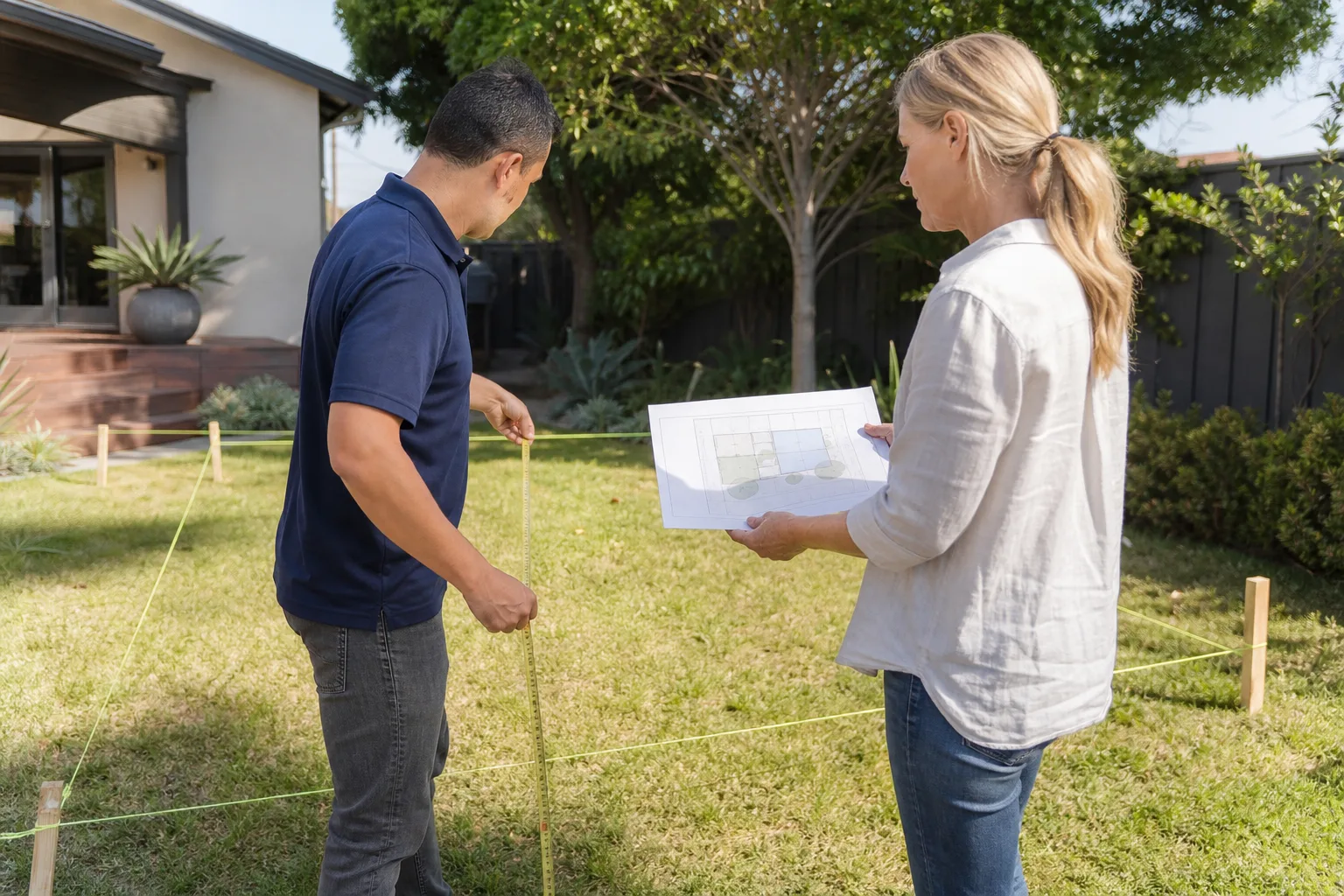
Site prep and utilities for a Cover unit in Dallas typically run $8,000 to $25,000 installed, depending on whether we’re bringing in new sewer and water lines from the street or just extending what’s already at the house. We carry the connectors, fittings, and coordination packages that match Cover’s panel-built foundation and utility rough-in specs, and most common parts are on our truck or a day out from our Dallas supplier. You usually discover a site prep problem one of two ways: the Cover delivery team flags an issue during their pre-site inspection, or you see water pooling, slow drains, or a breaker tripping after the unit’s been set.
Before we dig into specifics, let me be direct: this is the unglamorous half of an ADU build, and it’s where I’ve seen homeowners lose the most money. The pad, the trenches, the tie-in to your existing sewer and electric panel. Get it wrong and you’re cutting into fresh concrete six months later at triple the cost. Get it right and the Cover unit drops onto the foundation like it’s been there for years.
Which Cover Models This Applies To
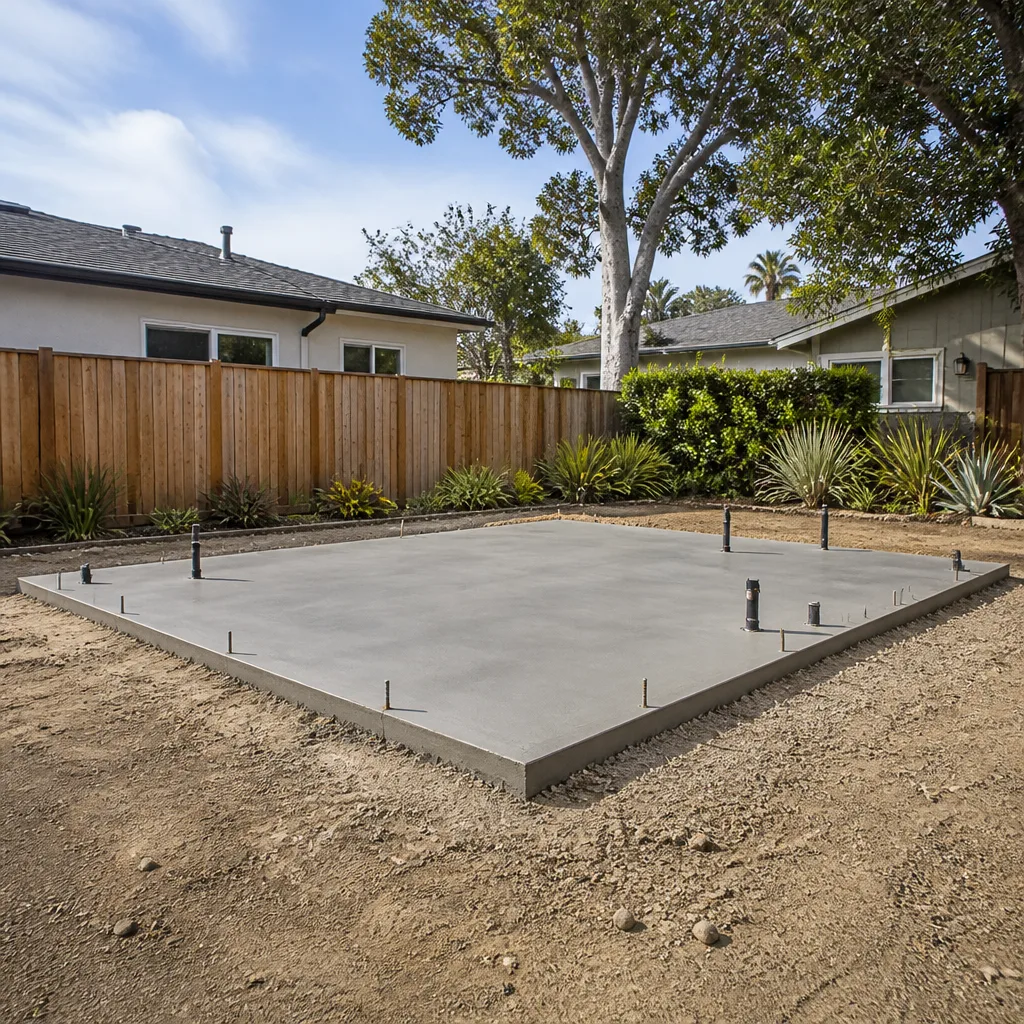
Cover builds panelized ADUs in a handful of standard footprints, and their utility rough-ins land in predictable spots: sewer stub-up at the wet-wall rear corner, electrical service entry on the side closest to your main panel, and a main water feed that enters either through the floor chase or a side wall. The site prep work is largely the same across the Cover Standard and Cover Studio lines, but the panel-built chassis on newer Cover units sits lower to grade, which changes finish-floor elevation and trench depths by a few inches. That matters in Dallas because our soil shifts, and a trench that’s too shallow means a busted PVC lateral the first time the clay expands and contracts through a hot summer and a wet spring.
One compatibility gotcha worth knowing: Cover’s proprietary foundation bolt pattern uses specific anchor spacing that off-the-shelf threaded rod and standard J-bolt layouts won’t match without a drilling jig. If you’re sourcing your own materials, verify the bolt layout on your Cover plans before pouring concrete. We stock the correct anchor packages because homeowners who buy anchors at a big-box store in Dallas end up with anchors that don’t line up, and that’s not a problem you want to discover on set day.
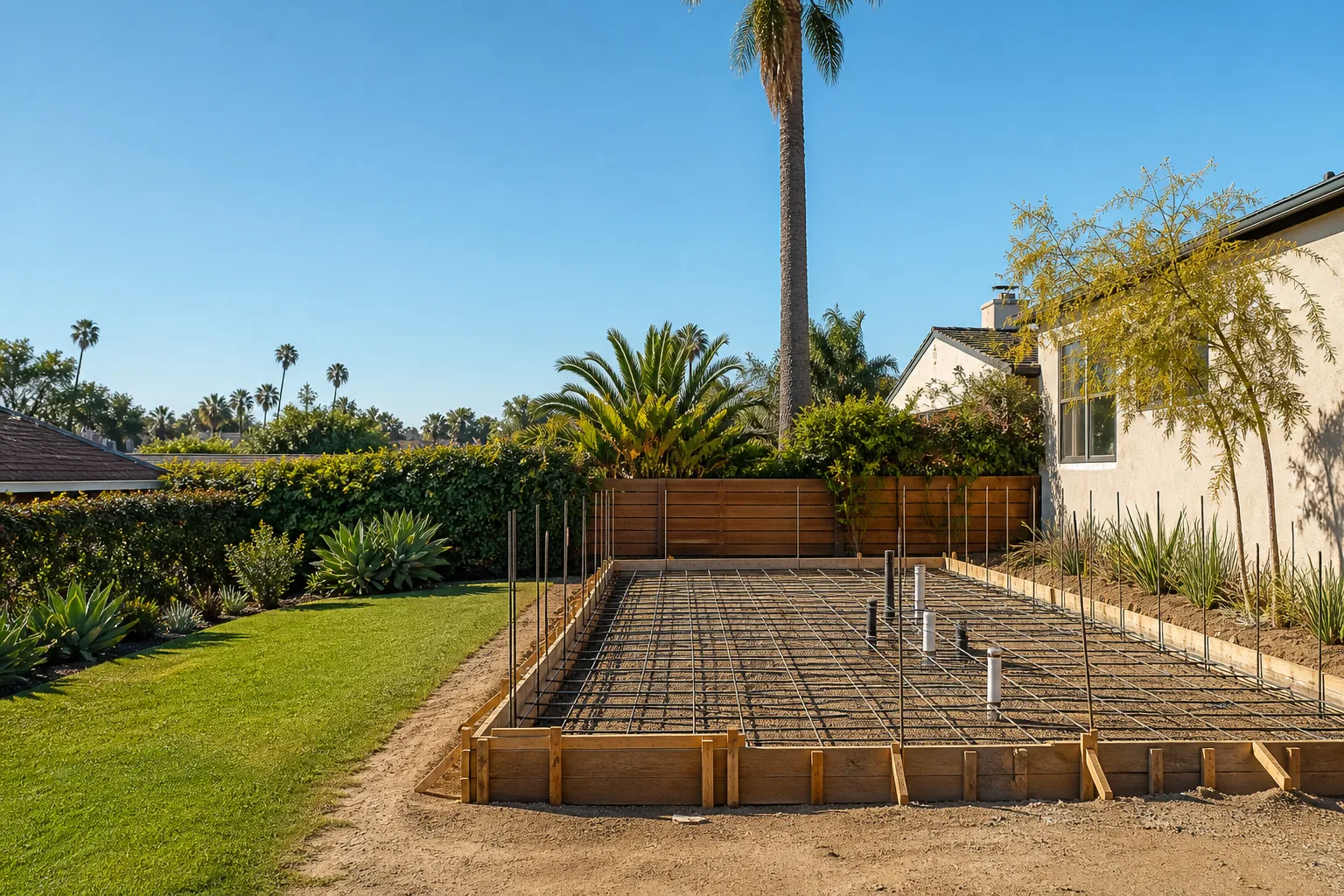
OEM vs. aftermarket matters less for site prep than for mechanical parts, but it matters. Cover specs their sewer laterals at 3-inch diameter with specific fall rates, and their foundation plans assume a compacted base of at least 6 inches of crushed stone under the slab. Cheap aftermarket materials or skipped compaction and you get pad settlement, which is the most expensive site prep failure there is. We use aftermarket materials where they’re indistinguishable from OEM, and OEM anchors and utility entry collars where they aren’t.
Signs Your Cover Site Prep & Utilities Is Failing
- Water pooling near the unit after rain. In Dallas, heavy clay soils drain slowly, and pooling usually means the pad wasn’t graded with enough fall away from the structure. If water sits against the unit base, you’ll eventually get moisture intrusion into the floor assembly.
- Slow drains or gurgling toilets inside the Cover unit. This points to a sewer lateral that’s either sagging, undersized, or not graded to the 1/4-inch-per-foot fall that Cover’s plumbing rough-in expects. Clay soil shifts enough over time to knock a marginally-sloped line out of grade.
- The unit sits visibly low on one corner. A patio that slopes toward the front door or a visible gap under one corner of the skirting means the pad has settled unevenly. This is almost always a compaction issue, and in Dallas it gets worse after a wet spring.
- Breakers trip when the mini-split cycles on. Cover units pull specific amperage on startup. If the feeder line from your main panel is undersized or the conduit run is too long for the wire gauge that was pulled, you’ll chase this problem until the wire is replaced.
- An odd smell like sewer gas near the outdoor utility connection. That’s a failed wax ring or a cracked cleanout cap at the sewer stub-up, and in Dallas heat, it smells all summer long until you fix it.
Replacement Cost & What’s Included
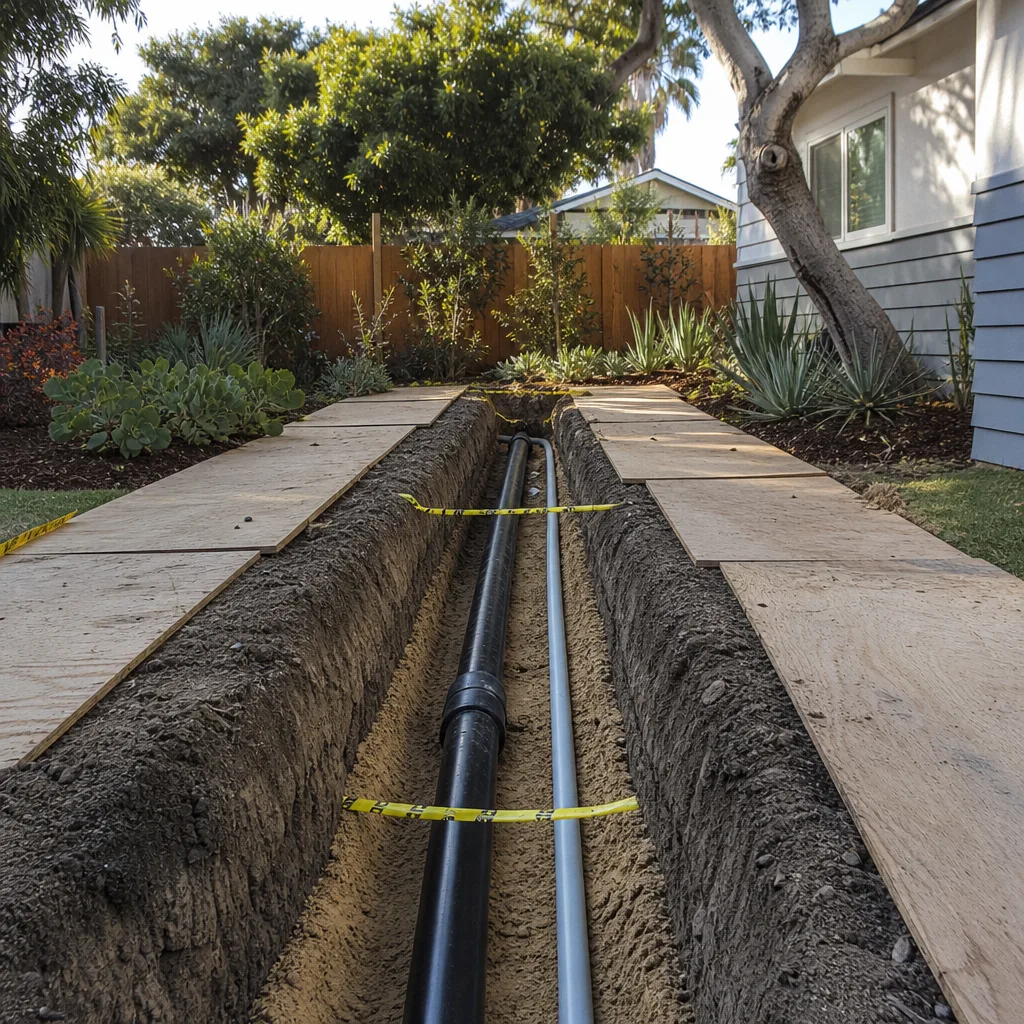
Here’s the honest range, because you shouldn’t have to call just to get a ballpark.
- Utility trenching and tie-in (water, sewer, electric) with trench backfill and compaction: $6,000 – $14,000, depending on how far the unit sits from the house and how deep Dallas code requires the lines to run.
- Site grading, pad base prep, and crushed stone base: $1,500 – $4,000, based on the pad size and how much fill has to come in or go out.
- Anchor bolt and foundation correction (if the pad is salvageable): $800 – $2,500, depending on what has to be re-drilled or re-set.
- Full site prep from scratch with new pad, utilities, and grading: $8,000 – $25,000, all in.
Every quote includes the line-item parts cost and the labor, separately, in writing before we dig. Where homeowners get burned in Dallas is a lowball trenching quote that doesn’t include backfill compaction, then a change order for “unexpected” fill dirt. Our written price covers the trenching, the materials, the backfill, the compaction, and the permit inspection, with no change order waiting for you at the end. The work carries our 365-Day Done Right Promise: if the site prep fails within a year, we come back and make it right at no charge.
DIY or Call Us?
If your Cover unit has been set already and you’re seeing pooling or drainage issues, there are a couple of things you can check without getting hurt: clear debris from the area where your sewer cleanout sits and confirm that downspouts and splash blocks run away from the unit. That’s a five-minute Saturday job and worth doing before you call anyone.
But trenching, utility tie-ins, pad work, and anything involving the electrical feeder from your main panel is not a DIY job. Digging near existing gas and electric lines in Dallas requires calling 811 for line locating, and you need a city permit for any trench deeper than 24 inches or any utility connection. Mess up a sewer lateral and you’re dealing with sewage backing up into your ADU. Mess up an electrical tie-in and you’re risking a fire. This is the work where a pro pays for themselves on the first job. Call us at (361) 204-4652 and we’ll send someone out to look at what you’ve got, tell you what actually needs doing, and give you a written price while we’re there.
FAQs
Done right, the pad and utility connections should last 30+ years, with PVC sewer laterals lasting 50 years or more. The weak point in Dallas is compaction: clay soil expands and contracts with our wet-dry cycles, and a poorly compacted base can settle within 2-3 years. That’s why we over-compact everything to 95% density before the pad goes in.
Sometimes, yes. If the pad has settled but is structurally sound, we can mud-jack or re-level specific sections. If the sewer lateral is sagging, we can often replace just the bad section rather than the whole run. But if water has been running under the unit for more than a season, you’re usually looking at a bigger correction. Call (361) 204-4652 and we’ll tell you the truth either way.
A sewer lateral replacement on an existing Cover unit takes 2 to 3 days, including inspection. A full site prep job for a new unit takes 5 to 10 working days, depending on trench depth, weather, and Dallas permitting turnaround.
We keep Cover-spec anchor bolt packages, utility entry collars, and the common PVC fittings in stock at our Dallas shop. For the rarer items, our supplier has next-day availability. We also carry parts compatibility for Abodu and Dvele units, if you’re working on a different prefab on the same property.
Written by Russ Delmar, Owner, Lodgewick ADU Dallas at Lodgewick ADU Dallas, serving Dallas and nearby areas.